Arizona’s vape waste solution
Keeping vapes out of landfills starts with access.
ResQ Vapes is building Arizona’s first public household vape drop-off network, powered by community business sponsors, while giving schools, employers, vape retailers, and other organizations a simple ship-back box for non-household vape waste that needs a more controlled path.
Consumer nicotine vapes need public drop-off access instead of common trash.
ResQ is testing an Arizona public drop-off network built for household vape returns.
Retail inventory, workplace vapes, and confiscated devices are a different waste stream.
Businesses, schools, and agencies should not mix controlled waste streams with household returns.
Founding sponsorship includes Meta and Instagram support to build pilot awareness.
Physical bin visibility gets reinforced online while consumer behavior ramps.

 Trash habit
ResQ habit
Trash habit
ResQ habit
How ResQ solves it
Public access for consumers. Ship-back boxes for everyone else.
The missing piece is not just recycling. It is routing. Household consumer vapes need a public drop-off network. Non-household vapes from businesses, schools, employers, retailers, venues, and municipalities need sorted, controlled collection through a dedicated take-back box.
Household vape drop-offs
A 15-location Arizona pilot designed for voluntary post-consumer household nicotine vape returns, funded by useful sponsor visibility.
Non-household vape waste
Pre-labeled 10x10x10 ship-back boxes for expired retailer inventory, school-confiscated devices, workplace disposal, venues, and other controlled streams.

Pick your path
What kind of vape waste are you dealing with?
Hover or tap a panel, then click through to the right solution.
Vape Shops
Expired inventory, damaged products, returns, leaking devices, and unsellable stock are not the same as customer household drop-offs.
One bad waste stream can become a regulatory problem.
Separate it, box it, seal it, and ship it back before it becomes a back-room liability.
Schools
Confiscated vapes can pile up in offices, cabinets, and security areas without a clear disposal process.
Confiscated does not mean harmless.
A pre-labeled box gives staff a controlled collection point and a simple return path when full.
Employers
Offices, call centers, hotels, gyms, warehouses, and sales floors all have employees disposing of vapes onsite.
Your trash should not carry the risk.
Put the box where employees already pass by. When full, seal it and send it out with UPS or FedEx.
People Who Vape
Your personal used vape is household hazardous waste and should not go in household trash or curbside recycling.
Keep it out of the trash.
Public drop-offs are growing. Until then, use city or county household hazardous waste options when available.
Sponsors
Brands can fund public collection while earning real-world visibility in high-traffic vape retail locations.
Be the brand that made disposal possible.
Founding sponsors get physical bin visibility plus a $300/month Meta and Instagram boost.
Municipalities
Communities need a better answer for lithium battery devices and nicotine residue entering public waste streams.
Public drop-off is the missing infrastructure.
ResQ helps cities and partners create safer collection access without starting from scratch.
Know the difference
The source of the vape changes the risk.
Same device, different source, different rules. Flip the cards to see why.
Personal used vapes may fall under the household hazardous waste lane.
EPA strongly encourages alternatives to household trash disposal for e-cigarettes.
Devices collected by a school, city, employer, or agency are not voluntary household returns.
EPA’s household exclusion is for waste generated at residences; schools and businesses must determine their generator category.
Expired, damaged, leaking, returned, or unsellable vapes are different.
EPA says vape shops are healthcare facilities for the limited purpose of Subpart P.
Nicotine e-liquid is acute hazardous waste when discarded by businesses.
EPA says more than 76 full Elfbars can exceed 2.2 lb of acute hazardous waste.
Lithium batteries may be ignitable or reactive hazardous waste.
EPA warns damaged lithium batteries can cause fires during transport and at waste facilities.
Why Arizona vape shops should pay attention
Cross the line, and the rules get heavier.
Knowing is half the battle.
EPA lists Arizona as adopted and authorized for Subpart P.
EPA’s state map was last updated June 30, 2026.
EPA says generator category depends on all hazardous waste generated onsite.
Other hazardous waste onsite can affect the generator category too.
EPA warns accumulating more than 2.2 lb acute waste onsite can create LQG risk.
EPA recommends regular off-site shipment to avoid accumulating 2.2 lb onsite.
EPA’s Subpart P rule prohibits sewering hazardous waste pharmaceuticals.
EPA says do not put nicotine e-liquids down the drain or rinse them out.
Educational information only. ResQ Vapes does not provide legal advice. Generator status and waste requirements depend on source, quantity, storage, transportation, state rules, and downstream handling. Confirm requirements with ADEQ, EPA guidance, and qualified compliance support.

The bigger plan
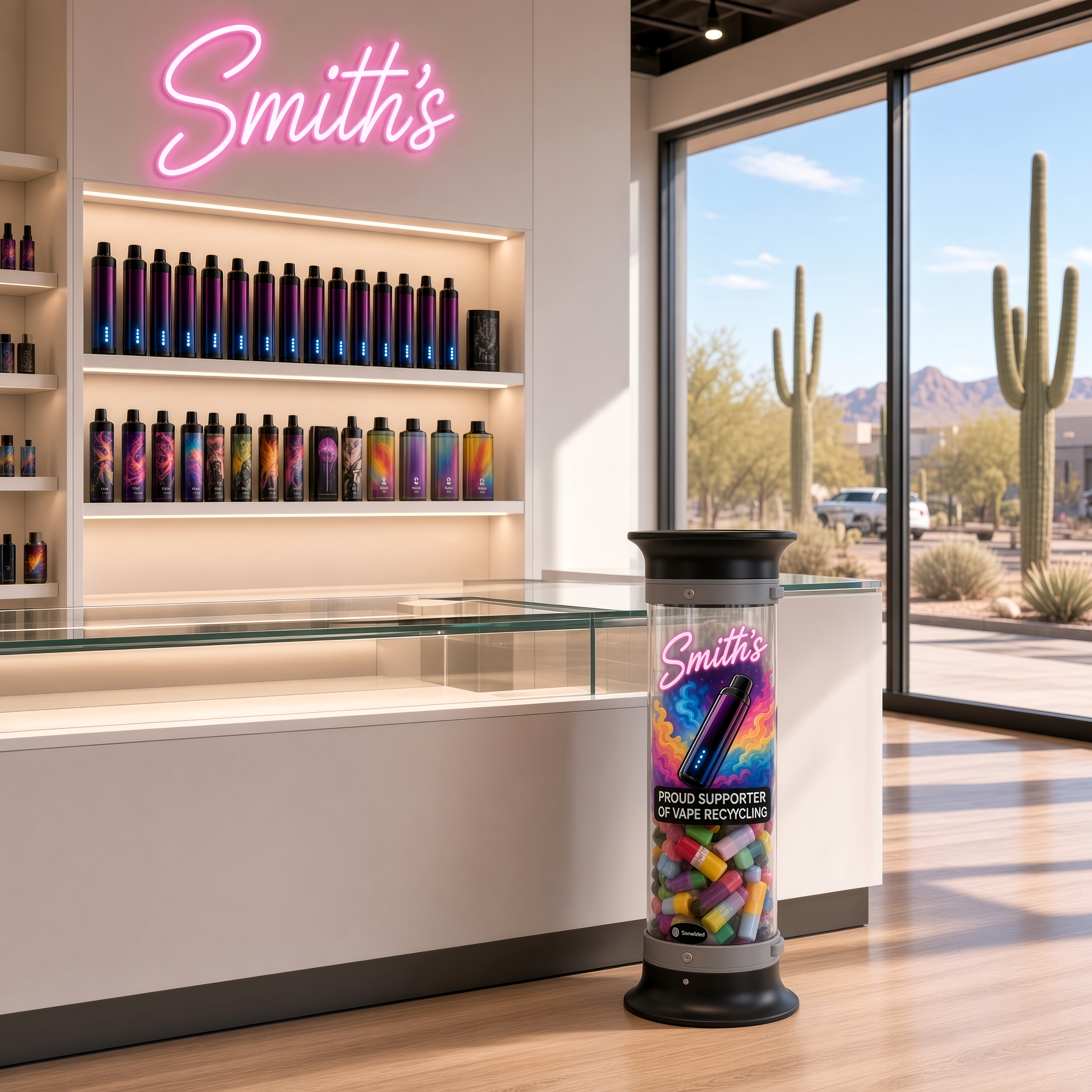
The next great ad space is useful.
People ignore ads that interrupt them. They remember brands that solve a problem in the moment. ResQ gives sponsors a ground-floor lane in a category moving from invisible waste problem to public infrastructure, with $300/month in Meta and Instagram support included during the pilot.