ResQ bin & box guidelines
The right vape waste has to go in the right lane.
ResQ’s upcoming 15-location public pilot is for household consumer nicotine vapes only. Business inventory, confiscated devices, workplace vape waste, damaged devices, THC products, and mixed materials need a different process.
Voluntary post-consumer nicotine vapes from individual household users.
Do not mix public returns with confiscated, workplace, or retailer inventory waste.
For retailers, schools, workplaces, venues, and organizations that need a controlled box.
No leaking, crushed, swollen, hot, burned, smoking, or taken-apart devices.
The core rule
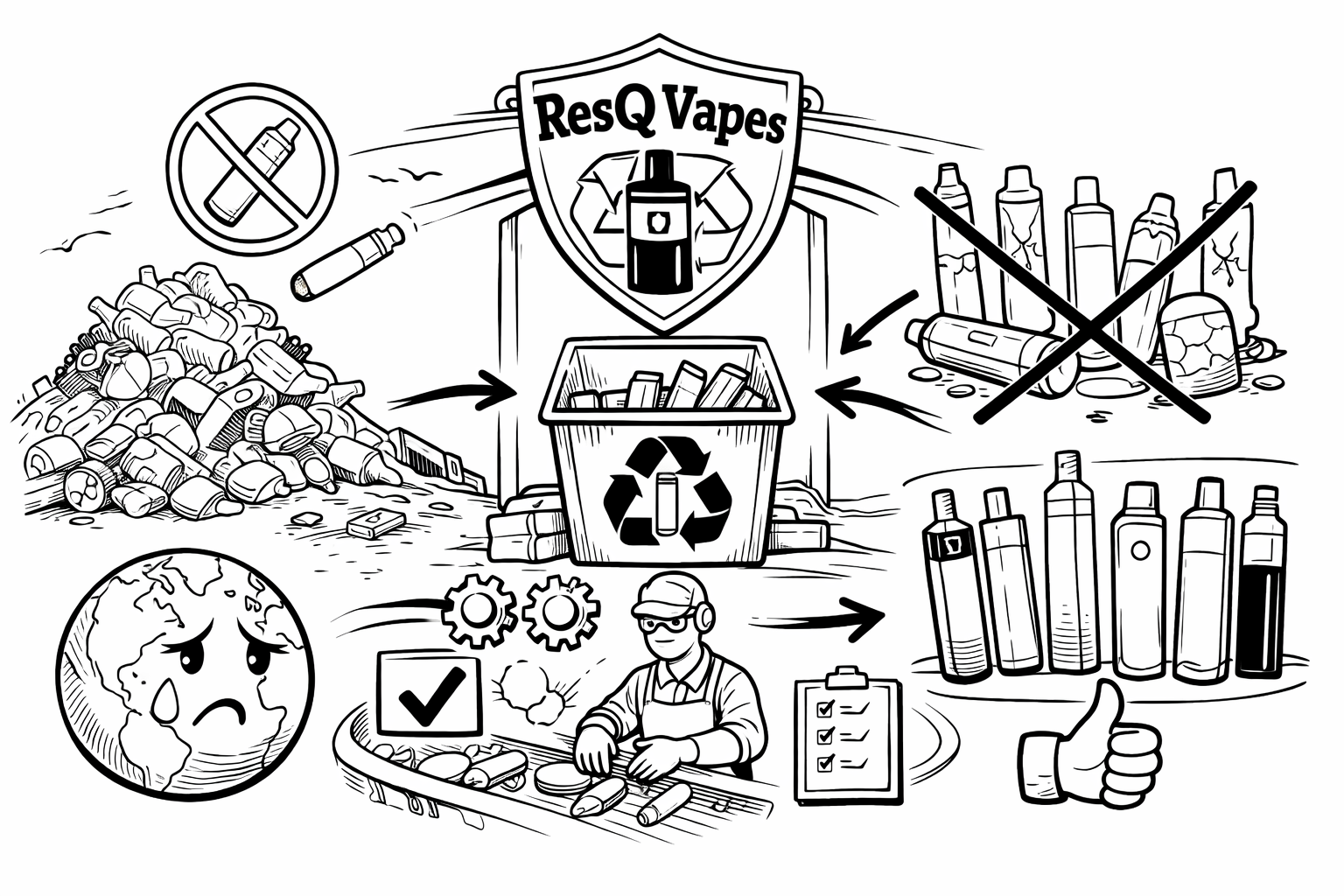
Public bins are for household consumer nicotine vapes only.
The 15-location pilot is designed to test voluntary post-consumer household vape collection. That means personal used nicotine vapes from individual consumers, not store inventory, confiscated devices, business waste, THC products, loose batteries, loose e-liquid, mods, tanks, pods, or damaged devices.
View Public Drop-Off Plan
Accepted vs not accepted
What can go in the public pilot bins?
Household used disposable nicotine vapes
Undamaged disposable nicotine vape devices from individual consumers. The device should be intact, not leaking, not crushed, not swollen, not hot, and not taken apart.
Anything outside the household nicotine lane
No THC, cannabis, hemp, CBD, loose batteries, loose e-liquid, bottles, pods, tanks, mods, chargers, phones, laptops, general e-waste, business inventory, or confiscated devices.
If it is damaged, do not put it in a public bin.
EPA warns not to attempt to remove embedded batteries or cartridges from e-cigarettes because it can cause fires. If a device is crushed, swollen, leaking, hot, burned, smoking, or damaged, stop and contact ResQ or your local household hazardous waste program for guidance.
Choose the right path
Different sources need different solutions.
This is the most important part of the program. Household consumer returns should not be mixed with commercial, confiscated, or workplace waste streams.
People who vape
Your personal used disposable nicotine vape belongs in the household hazardous waste lane. Until public ResQ bins are live near you, use city or county household hazardous waste options when available.
Vape shops
Expired inventory, unsold inventory, damaged products, returned devices, and leaking units are store-generated waste. EPA says nicotine e-cigarettes and e-liquids are P075 acute hazardous waste when discarded.
Confiscated devices
Confiscated devices are not voluntary household returns. Devices collected by schools, municipalities, employers, venues, or agencies need a controlled collection path and should not enter public household pilot bins.
Workplace trash
Employee-disposed vapes in office, hotel, gym, call center, warehouse, or sales floor trash can create nicotine and lithium battery risk. Businesses should use a dedicated take-back box.
Sorting rules
Do not combine these in the same box.
For ResQ’s box program, sorted streams help protect the program, simplify documentation, and reduce confusion for staff and collection partners.
Voluntary consumer returns
These are personal used nicotine vapes brought back by individual consumers. Keep them separate from anything generated by a shop, school, employer, or agency.
Retail inventory waste
Expired, unsold, recalled, returned, or unwanted inventory from a vape retailer should go into a retailer-specific 10x10x10 box.
Confiscated or workplace waste
Vapes collected by schools, employers, venues, security teams, or municipalities should use their own dedicated box, not a public household bin.
Hard no list
Do not put these in ResQ public pilot bins.
If you are unsure, do not drop it in. Contact ResQ before placing questionable items into a bin or box.
THC, cannabis, hemp, or CBD vapes
ResQ’s public pilot is for nicotine vapes only. Cannabis or THC products can create different regulatory, residue, and chain-of-custody issues.
Damaged, leaking, hot, or swollen devices
Do not place unsafe devices in public bins. EPA warns lithium batteries can catch fire, especially when damaged.
Taken-apart devices or loose batteries
EPA says not to attempt to remove embedded batteries or cartridges from e-cigarettes. Do not drop loose parts into public bins.
Loose liquid, bottles, tanks, pods, mods, or e-waste
No loose e-liquid, refill bottles, cartridges, tanks, mods, chargers, phones, laptops, power banks, appliances, or general electronics.
Why these rules matter
The guidelines are what let the pilot scale.
Lithium batteries can burn.
EPA says e-cigarettes contain lithium batteries and should not go in trash or recycling because damaged batteries can cause fires during transport and at waste facilities.
Nicotine is not harmless residue.
EPA identifies nicotine e-cigarettes and e-liquids as P075 acute hazardous waste when discarded by businesses.
Clean streams build trust.
Public household bins, retailer boxes, school boxes, and workplace boxes need to stay separate so each waste stream can be managed correctly.
Source references
Regulatory language behind the rules.
These links are provided for education. Always confirm requirements with ADEQ, EPA guidance, local agencies, and qualified compliance support.
EPA: Household e-cigarette collection
EPA says household e-cigarettes should be kept separate from commercially generated waste and warns not to remove embedded batteries or cartridges.
Read EPA tip sheetEPA: Individuals
EPA says individuals should not place e-cigarettes in household trash or recycling because of nicotine toxicity and lithium battery fire risk.
Read EPA individual guidanceEPA: P075 nicotine waste
EPA says nicotine-containing e-cigarettes and e-liquids are hazardous waste code P075 when discarded by businesses.
Read EPA FAQStill unsure?
When in doubt, keep it out.
If the device is damaged, THC/cannabis, loose liquid, business inventory, confiscated, workplace-generated, or mixed with other materials, do not put it in a public pilot bin. Use the right box or contact ResQ first.
ResQ Vapes does not provide legal advice. Program eligibility, accepted materials, storage, transportation, and downstream handling depend on the source and condition of the material.